
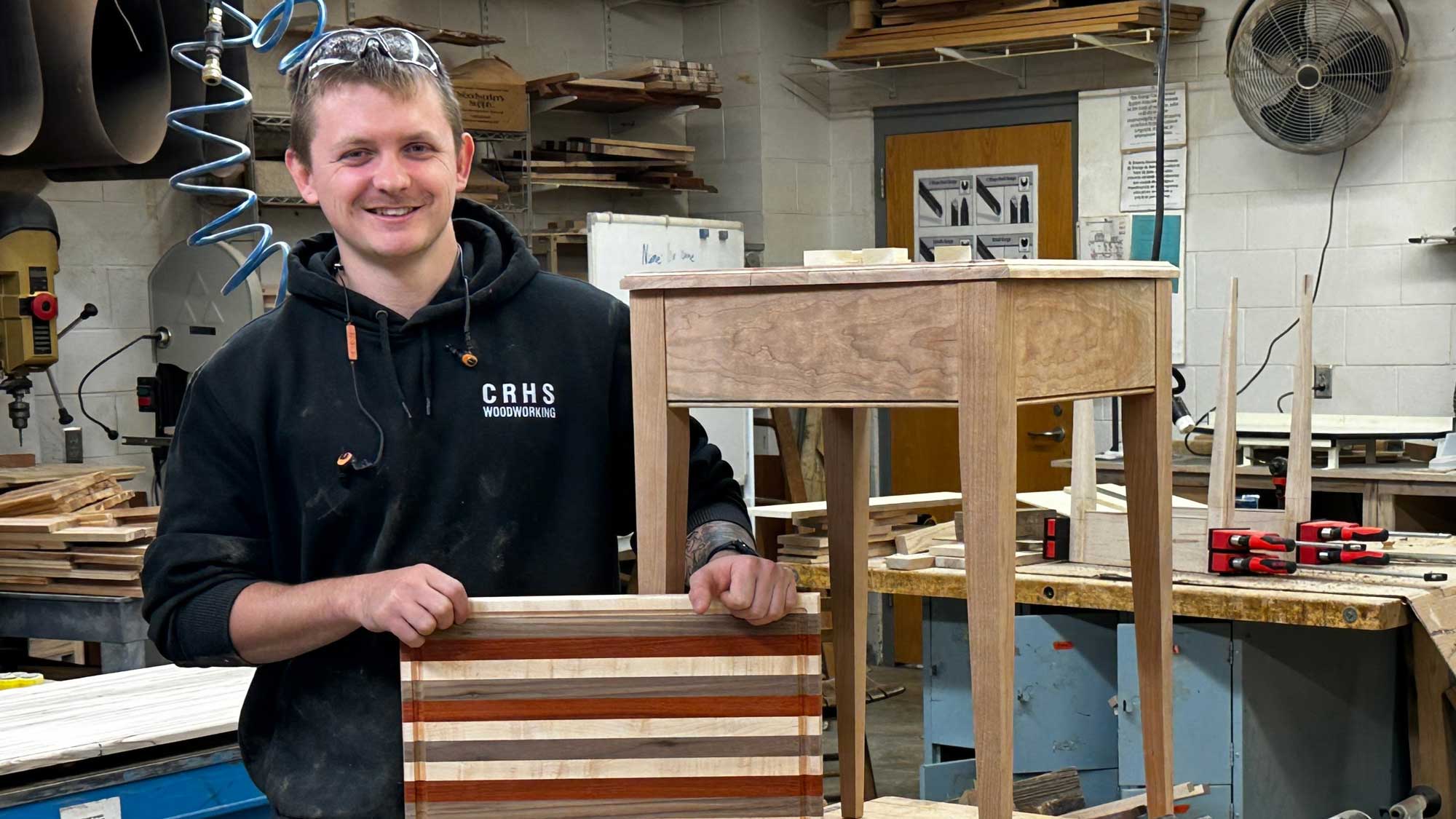
Photo courtesy of Orange County (N.C.) Schools. Used with permission.
The hallways at Cedar Ridge High School lead to many paths. With an enrollment of around 1,100, classes run the gamut from traditional academics to Advanced Placement courses, career and technical education. What is remarkable is that nearly half of the student body applied for one of 60 coveted seats in the Woodworking I class taught by Avery Pipkin.
Located in North Carolina, home to some 800-plus furniture manufacturing businesses, the students at Cedar Ridge intuitively understand that cabinet making and woodworking are time-honored and highly employable skills. But Pipkin, at 26 and five years into his teaching career, also attributes the popularity of the class to a healthy dose of competition. His mentor and the school’s former woodworking teacher, Keith Yow, trained over a dozen SkillsUSA state champions and one national champion. Pipkin aims to match, perhaps beat that record.
“It is human nature to be competitive. It gives them purpose. You want to improve your craft. You want to be the best at what you do.”
Proving his point, two of Pipkin’s students, Joshua Scism and Tyson Oswald, took home the gold and silver medals respectively in Cabinet Making at the 2025 SkillsUSA North Carolina state competition. Schism and Oswald also were finalists in the AWFS Fair 2025 (Association of Woodworking and Furnishings Suppliers) Fresh Wood Competition, held in Las Vegas. In addition, Pipkin has students who competed for prizes at the North Carolina State Fair and participated in the national What’s Your Angle Castle competition.
“My students see the value of being good at their craft. At competitions they also see other kids their same age and how good they are. Just like in sports, there is going to be a best person in the trade as well.”
And so, like seasoned athletes, he provides a place for his students to train regularly.
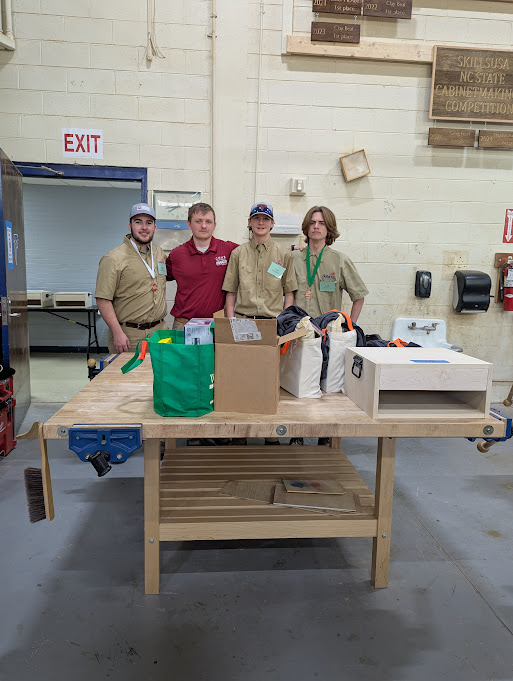

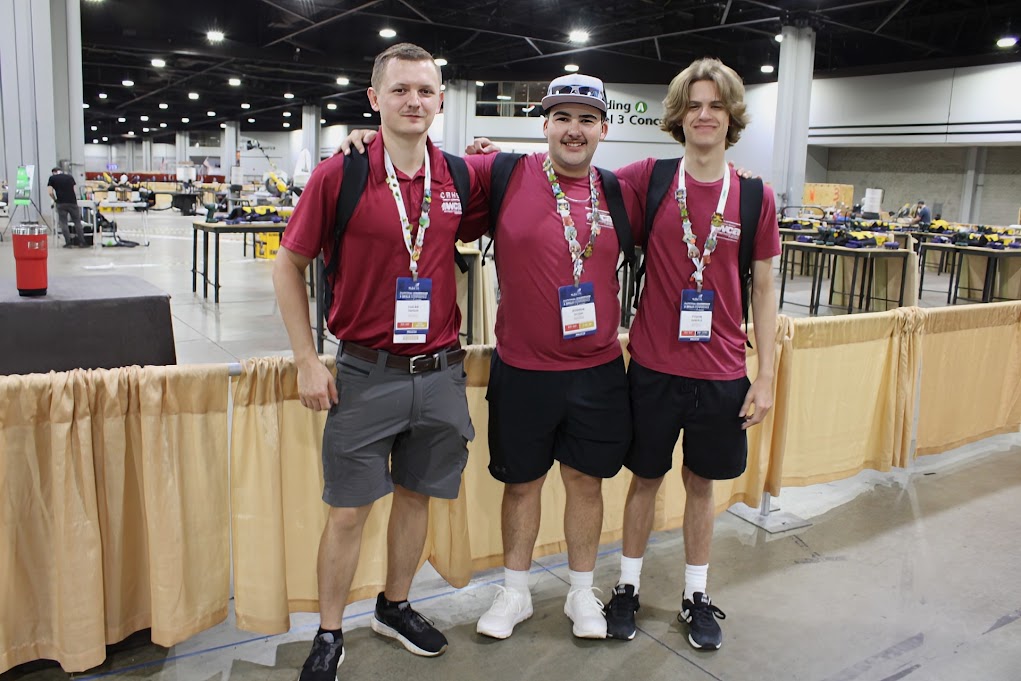

The competition requirements may differ but the basic skills and design principles remain the same, he says. To ensure his students bring their A-game to the playing field, Pipkin started an afterschool woodworking club.
“We start by building projects that were in the contests the previous year as a model,” Pipkin says, noting the extra hours also allow him to introduce machines or techniques not included in the standard curriculum plus more one-on-one instruction time. The club runs all year long so other activities, such as spring or fall sports obligations, are not a deterrent to joining.
Fine Tuning the Future
Recently recognized as the 2025 North Carolina Homebuilders Association’s Skilled Trades Teacher of the Year, Pipkin says it wasn’t so long ago that he was competing with SkillsUSA as a student. His teacher and SkillsUSA advisor, Dan Kern, of Montgomery Central High School, is also a chief skill evaluator for the Woodwork Career Alliance of North America (WCA).
“Woodworking was always my favorite class,” Pipkin says.
During his senior year he applied to and was accepted to Appalachian State University, where Pipkin planned to major in industrial design with a concentration in furniture design. Worried he might be stuck behind a desk prompted Pipkin to return to his original passion. He changed his major and finished college with a degree in education, with an emphasis on woodworking.
It had been a few years since he was in a classroom so Pipkin drove to Hillsborough to shadow Keith Yow — whom he’d met as a high school student through SkillsUSA. The two still talk regularly, and it was Yow who encouraged Pipkin to assume his role at Cedar Ridge after he’d retired.
Pipkin’s first year teaching was punctuated by the end of COVID restrictions in the classroom. Classes had been taught online and regular competitions derailed.
“We had to do some rebuilding,” he says, and the SkillsUSA chapter at Cedar Ridge needed a fresh start.
At the school’s open house, Pipkin displayed previous competition projects. He also started a social media page, which he continues to use to attract new students and share updates of various competitions.
“I want to show kids that there is a future in working with your hands in the skilled trades,” he says.
The curriculum builds from Day One with first year students learning the basics of different joinery techniques and fundamental tool use. Woodworking 2 students have the opportunity to earn the WCA Sawblade Certificate, a challenging credential, and students wishing to continue will tackle advanced woodworking skills and earn their WCA Core credential.
With hundreds of kids vying for a spot in his introductory class, Pipkin asks students to fill out a career development plan. The goal is to prioritize seats for those who want to pursue woodworking seriously.
“This year, every kid who was really interested got in. That helps with learning a lot, when kids want to be there.”
The school’s SkillsUSA chapter led by Pipkin is another learning opportunity, plus he runs a summer academy and the afterschool woodworking club which is open to all students, regardless of experience.
Woodworking can be tedious but it is never dull, Pipkin is quick to point out.
“Wood is always alive. There is a constant challenge with the material. And with wood, you have instant feedback. There is a design process but as soon as you start glueing boards, you can see the project taking shape.”
Last spring he watched his inaugural class graduate, those students who had started his first year teaching. One is a general handyman working in the construction field, another is attending NC State University studying furniture design. In 2026, Pipkin looks forward to seeing a larger contingent of students complete his program and move into the workforce.
His advice? Be proficient with your hands, get the certifications you can earn while in high school while it is free, and learn the software used for automation.
“It is great to know how to build with your hands, but you also need to learn to build with these machines. At the end of the day, it is still wood you are cutting.”