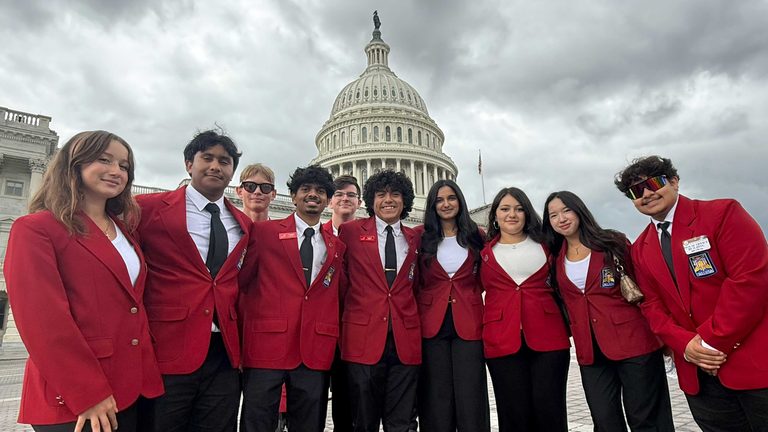

From left to right: Londell Cyrus; Adrina D’Anton. All photos courtesy of West Carteret High School.
For the SkillsUSA chapter at West Carteret High School in Morehead City, N.C., community service isn’t a box to check. It’s a mindset.
That’s how advisor Melissa Mason sees it, anyway. When she sat down with her chapter officers at the start of the school year, Mason wanted to build something with a wider reach than the typical service project. The plan they developed was ambitious: projects targeting three levels of impact — the school, the local community and the nation.
“We anchored our members in the idea that their responsibility as leaders expands beyond our chapter,” Mason explains. “We started at home to build pride, moved into our neighborhood to build networks, and reached out to our country to build character.”
For Mason, the projects were never just about getting things done. “It was about showing our students that whether they are picking up trash or supporting the military, they are applying the exact same professionalism, work ethic and civic duty that they will need in their future careers.”
Starting at Home
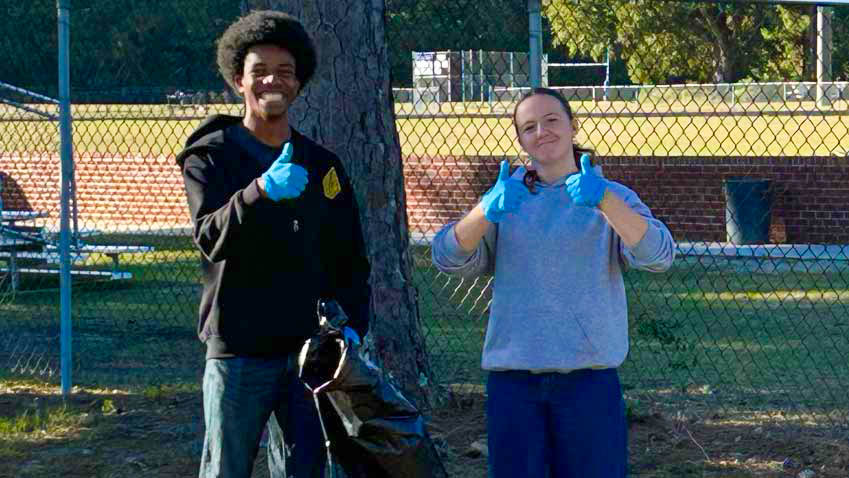
The first project began right outside the classroom door. Chapter Vice President Madilyn Peeples and her fellow members had noticed a problem that was easy to overlook: wind-blown debris and litter accumulating across the campus from recent school construction.
“This seemed to detract from the pride we feel for our school,” Peeples says. “So, we felt that holding a campus cleanup and inviting other students to join in would help build pride and unity.”
Peeples, who would later be elected as a 2026 North Carolina SkillsUSA state officer, helped lead the effort as chapter members grabbed work gloves and trash bags and fanned out across the West Carteret campus. By the time they finished, the group had collected six contractor bags full of debris — and something harder to measure: a sense of ownership over the space they share every day.
A Partnership Nobody Expected
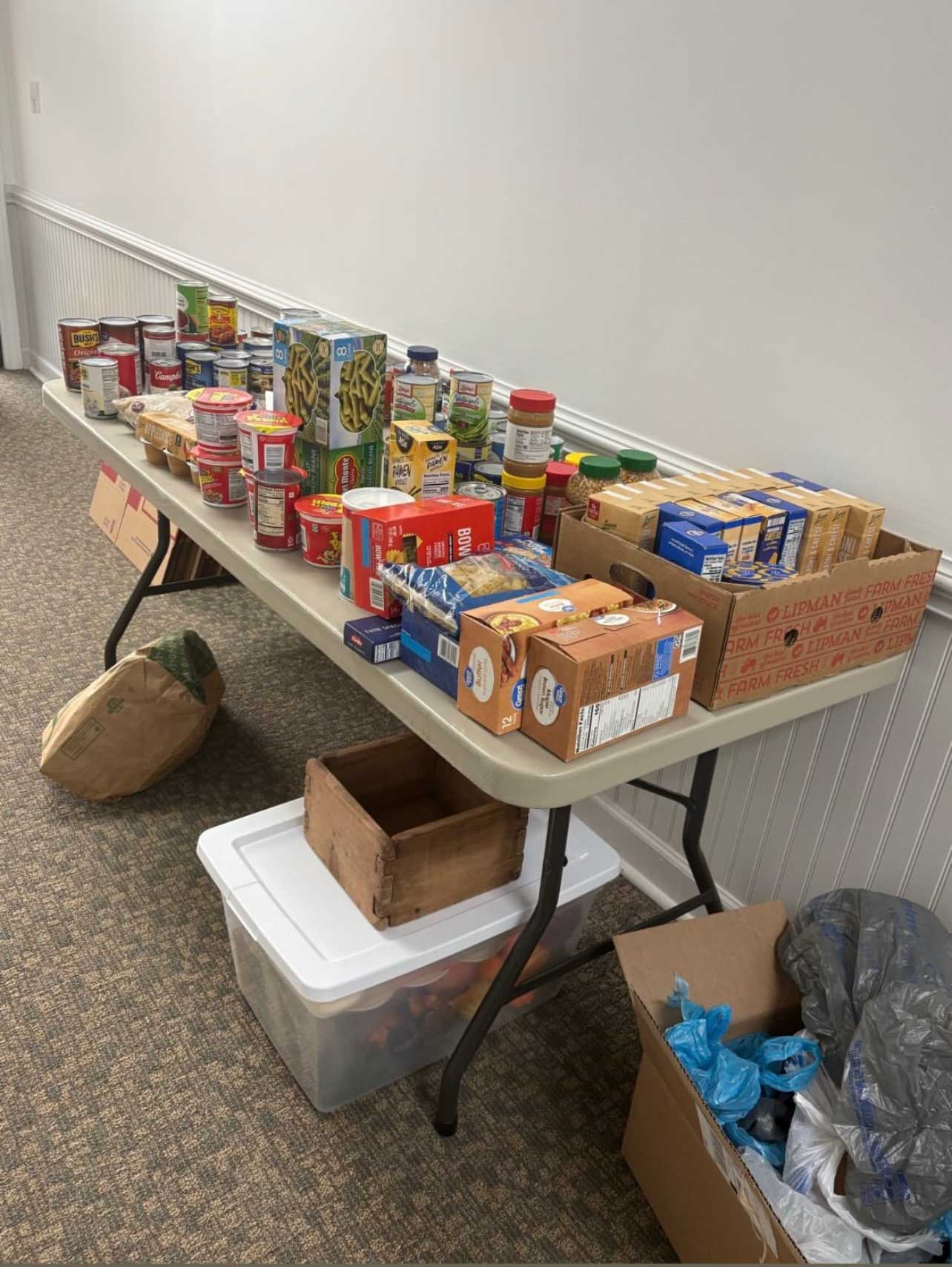
In November, the chapter turned its attention beyond campus to a challenge hitting close to home: food insecurity in the Morehead City area. Members organized a community food drive, collecting non-perishable goods to help local families heading into the holiday season.
What happened next, however, turned a straightforward collection effort into something none of them saw coming.
During a chapter meeting, a local restaurant owner visited as a guest speaker to discuss the realities of the hospitality industry. Chapter President Emma Cannon remembers the moment things shifted.
“He wasn’t just there to lecture — he was listening,” Cannon says. “As we laid out our goals for the food drive, we could see him mentally calculating. When he stood up and pledged to match every pound we collected, the energy in the room shifted instantly.”
Students had gathered 320 pounds of non-perishable goods on their own. With the restaurant owner’s match, that total jumped to 650 pounds of food, arriving just in time for the holidays.
For Cannon, the moment carried a deeper lesson. “It wasn’t just the promise of more food; it was the validation that he saw us as serious, professional partners,” she explains. “That moment turned a standard school food drive into a real-world business collaboration, and it taught us that when you approach people with a solid plan and genuine passion, the community will show up to support you.”
Cookies for the Troops
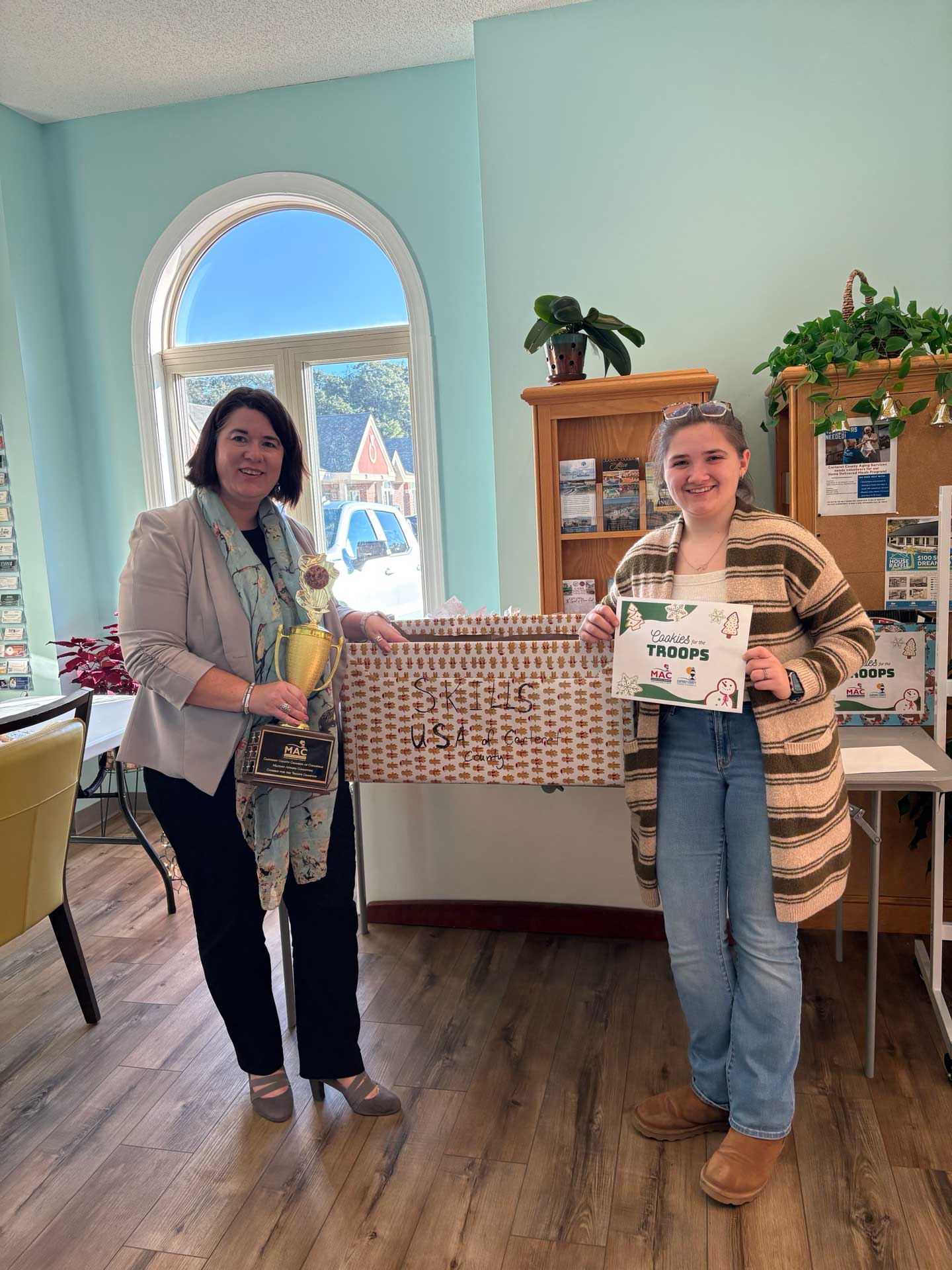
With their school cleaner and their community better fed, chapter officers decided to look beyond Carteret County for their final project. They wanted to do something for the people who couldn’t be home for the holidays at all: members of the U.S. military stationed overseas.
The chapter partnered with Cookies for Troops, an organization that bakes and ships homemade treats to service members. Students collected baking materials, then stepped into the kitchen to put their teamwork and their precision to the test.
Brody Pettipas, who served as the 2025 North Carolina SkillsUSA state secretary, was part of the effort. “Baking 500 cookies sounds fun,” he says, “but when you’re in the middle of a marathon baking session, you realize it’s actually a high-stakes logistics mission.”
Pettipas describes the reality of managing ingredients, oven rotations, packaging and shipping labels with the kind of precision that left the team exhausted — but fulfilled. “Knowing that a service member who hasn’t been home in months was going to open a package from us made every single cookie feel like a personal thank-you note,” he says. “It wasn’t just a project; it was a connection to something much bigger than ourselves.”
A Living, Breathing Process
Taken individually, each project tells a good story. But taken together, they paint a picture of a chapter that understands something fundamental about the SkillsUSA Framework: the Essential Elements aren’t just skills to practice in a classroom. They’re skills to practice in the world.
From the Work Ethic demonstrated during the campus cleanup, to the Professional Communication that turned a guest speaker visit into a game-changing partnership, to the Teamwork that produced 500 cookies for troops overseas, the students at West Carteret proved that the Framework, well, works.
Mason sees these projects as a blueprint for what her chapter can become. “We’ve learned that the SkillsUSA Framework isn’t a theory found in a textbook; it’s a living, breathing process,” she says. “Whether it’s improving our school campus, feeding our neighbors, or honoring our military, our chapter has proven that we don’t need to wait for ‘someday’ to become leaders.”
She pauses, then adds: “We aren’t just completing service hours. We are building a legacy of change that will continue long after our chapter members graduate.”