
Photo courtesy of Jason Ryan.
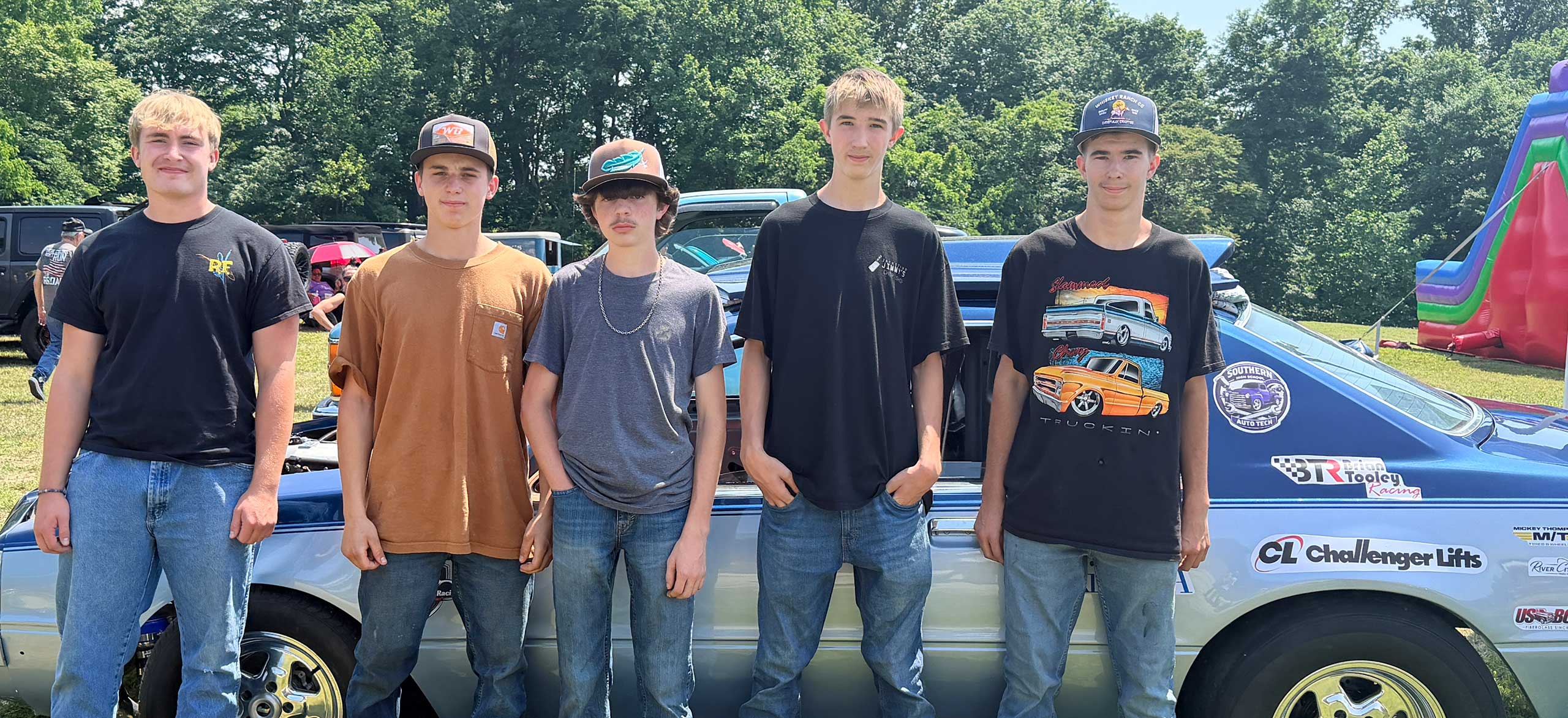
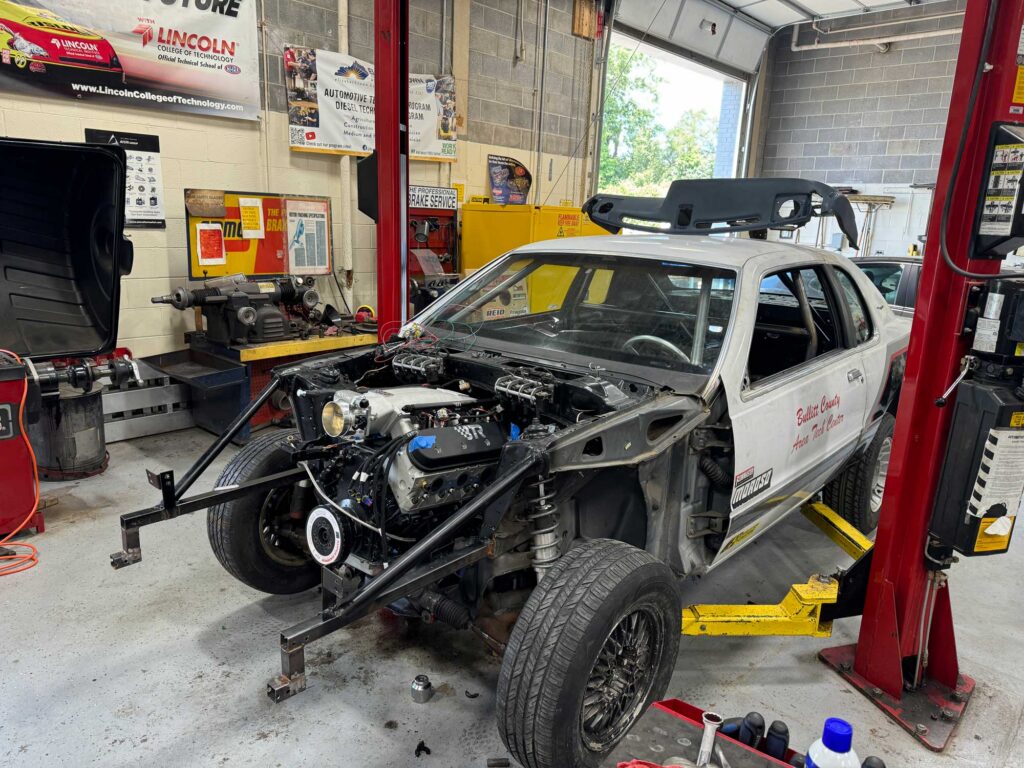
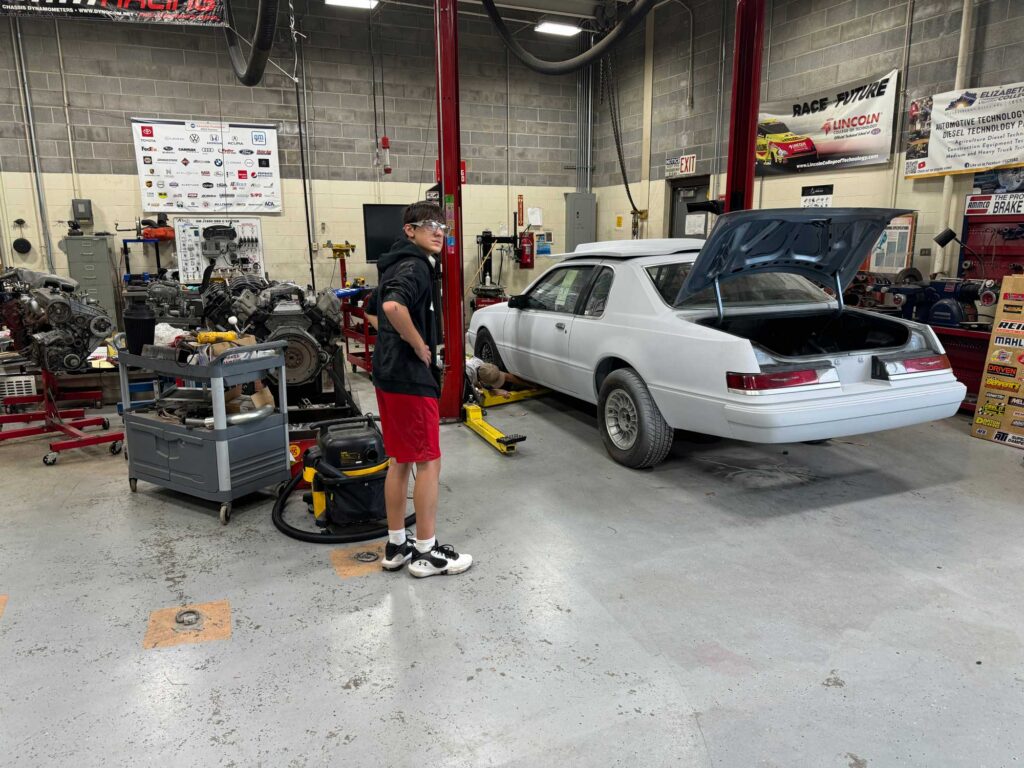
Behind the Bullitt County Area Technology Center (ATC) in Kentucky, a 1985 Ford Thunderbird sat idle, a relic with flat tires and gutted wiring from years of use as a student project car. Today, that same vehicle is a high-performance drag race car thanks to a dedicated teacher and his students who are rewriting the script on career and technical education.
The brainchild of ATC’s automotive technology instructor Jason Ryan, Bullitt County ATC Racing will take to the track this fall in a state well-known for its love of horsepower. The nearby Louisville metro area is home to two Ford assembly plants and just 45 minutes away is a Toyota manufacturing plant in Georgetown. In fact, there are more than 550 automotive-related companies in Kentucky, which is the number one producer of cars, light trucks and SUVs per capita.
Ryan, who recently finished his fifth year of teaching, is himself a graduate of the ATC program. Born and raised in the area, he sees the race car as a way to think outside the box when it comes to inspiring and encouraging students.
“When I took this job, I felt like there were not a substantial number of role models in the world, especially men. I told my wife, ‘If I can be a positive role model for one kid a year then I am winning.’”
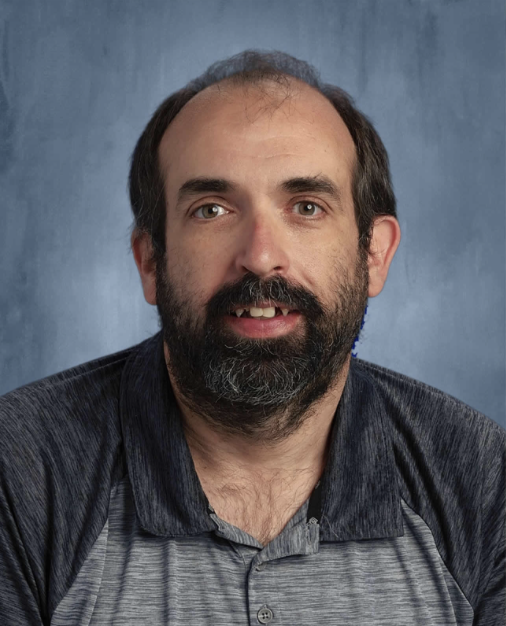
In Ryan’s classroom, respect is taught and given back in equal measure. “My room is very self-driven. We have tasks we have to do and cover, and the room itself is small, so I’m always looking to utilize the space as much as I can.”
His students punch a time clock and log on and off of different jobs, tracking their productivity just like they will be expected to do in a professional setting. “The class is run like a normal shop. We have book work, that is just part of teaching, but they also learn time management.”
A few years ago, Ryan turned his attention to the ‘85 Thunderbird. Body-wise it was in pretty good shape, so he brought his students in to brainstorm. The concept of a race car was raised and, at least initially, he figured they could fix up the exterior and use it as a recruitment prop.
In short order, the idea of rebuilding it into an actual race car began gaining traction.
School and district administrators were a bit hesitant, Ryan says, but agreed to his vision on one stipulation: He would be the one to race the car.
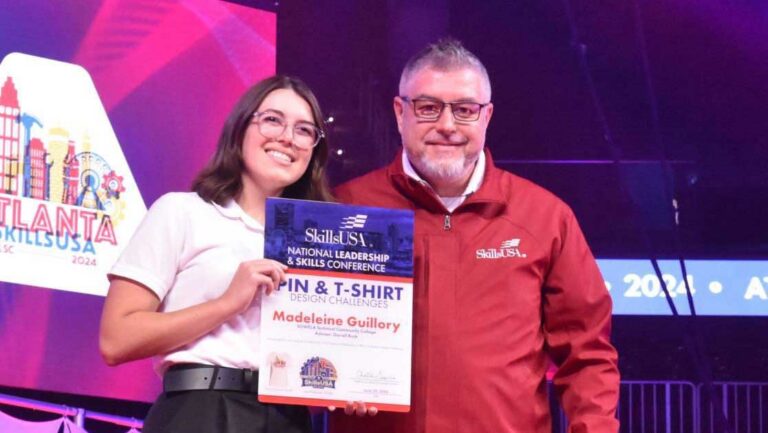
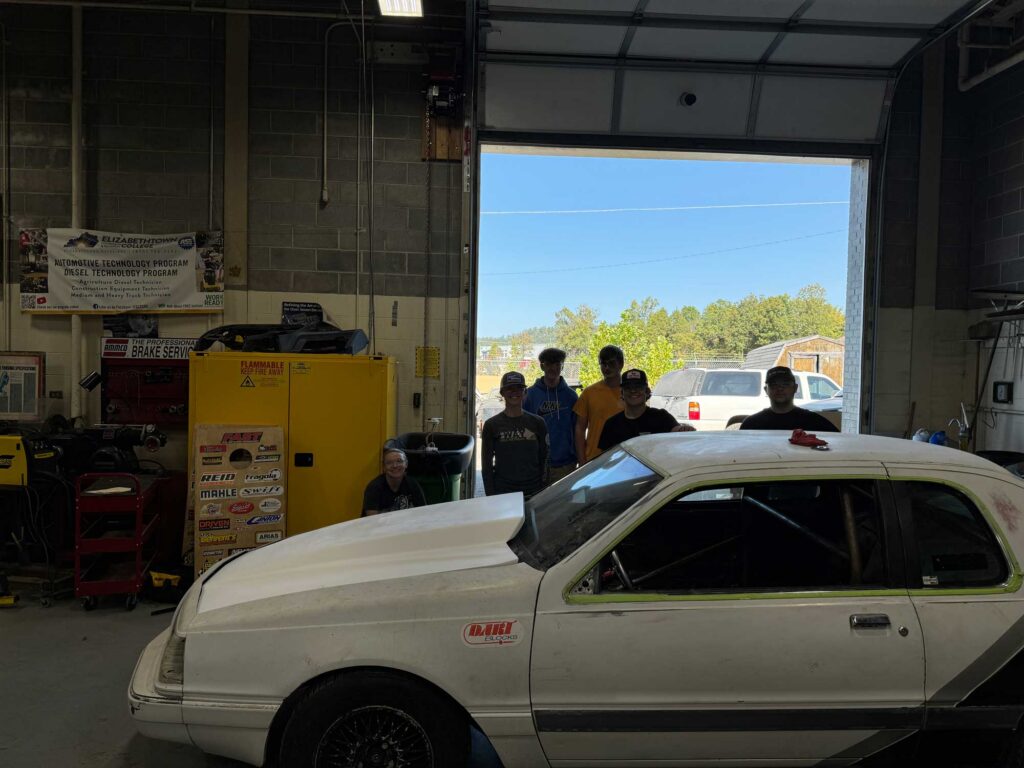
The project coalesced around ATC’s SkillsUSA chapter, where Ryan is the lead advisor. To work on the drag race car, students must be a club member — regardless of whether they were enrolled in automotive technology, welding or electrical trades.
Importantly, the drag race car follows the NHRA (National Hot Rod Association) rulebook, which includes strict safety regulations when it comes to setting up a street-legal race car: Compliance is mandatory.
On a white board in Ryan’s classroom, students wrote a list of every part they would need and work began to strip down and clean the old car. Students also reached out to the local business community, writing appeal letters and preparing sponsorship packages to acquire the materials needed. A few attended car shows on their own time and chatted up vendors, bringing more attention to the project.
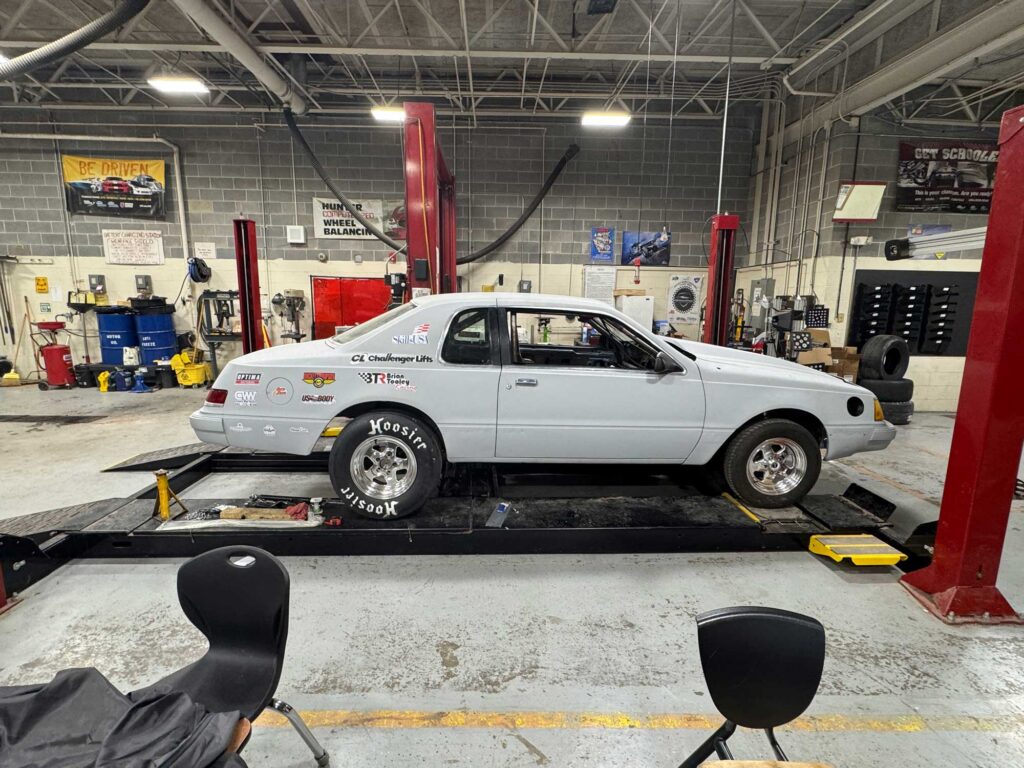
Brian Tooley Racing was an early sponsor, donating almost $4,000 to get the project underway. Challenger Lifts, a Snap-on Inc. company, donated almost $20,000 in tools to the team. Other local businesses donated wiring for the car and a battery.
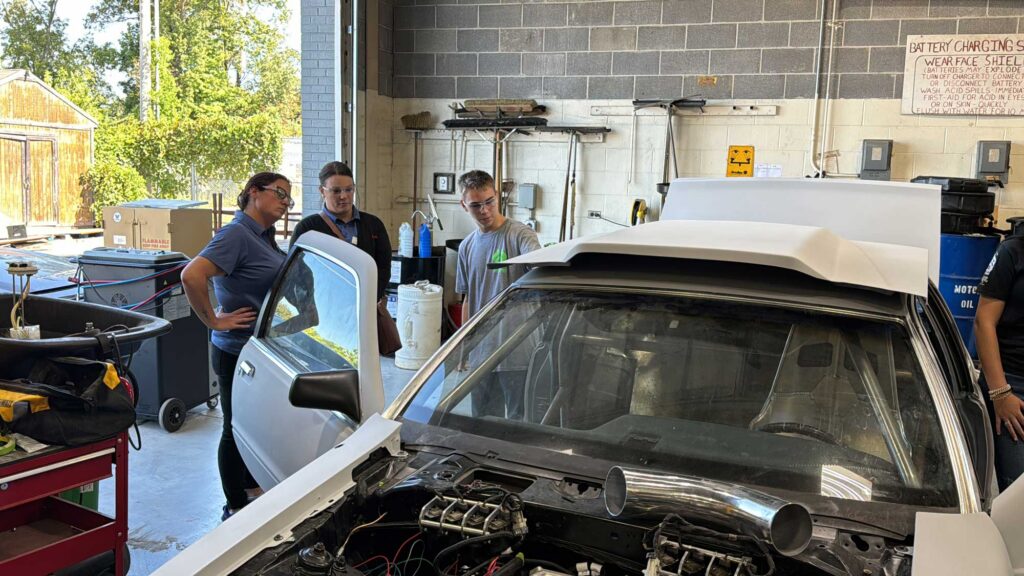
Students also had the chance to collaborate with other ATC trades beyond the automotive bay such as the welding and industrial maintenance classrooms, to fabricate custom parts because the budget runs tight. The project also partnered with students with Southern High School’s collision program for the final paint job.
“We covered a lot of ASE tasks as part of the curriculum to build the car. There’s been a lot of overlap, so we were able to use this project during class, in addition to working outside regular school hours.”
Inside the car, students who worked on the project but graduated before the race car was finished had the chance to sign metal panels, leaving a permanent mark on a vehicle they helped build. In all, it’s been three years in the making.
The Ultimate Recruitment Tool
The reach of Bullitt County ATC Racing extends far beyond the classroom. Ryan purchased two domain names for the project and repurposed his YouTube channel as a teaching tool. The students create videos of their work, in addition to creating a team logo, designing posters and other marketing materials, including team T-shirts.
“It’s been a really exciting project and it has taken much more time than I’d ever imagined. We were focused on getting the work done but to do that required funding, and that slowed us down. You can only build what you can pay for at that time,” Ryan says.
The whiteboard in his room has been an invaluable tool to keep students engaged, even when things seemed stagnant. A color-coding system made it easy to determine if a task was finished or was waiting for parts. Notes were written in the margins.
But even though the drag race car is nearly track ready, Ryan sees the project as an ongoing hands-on experience for students.
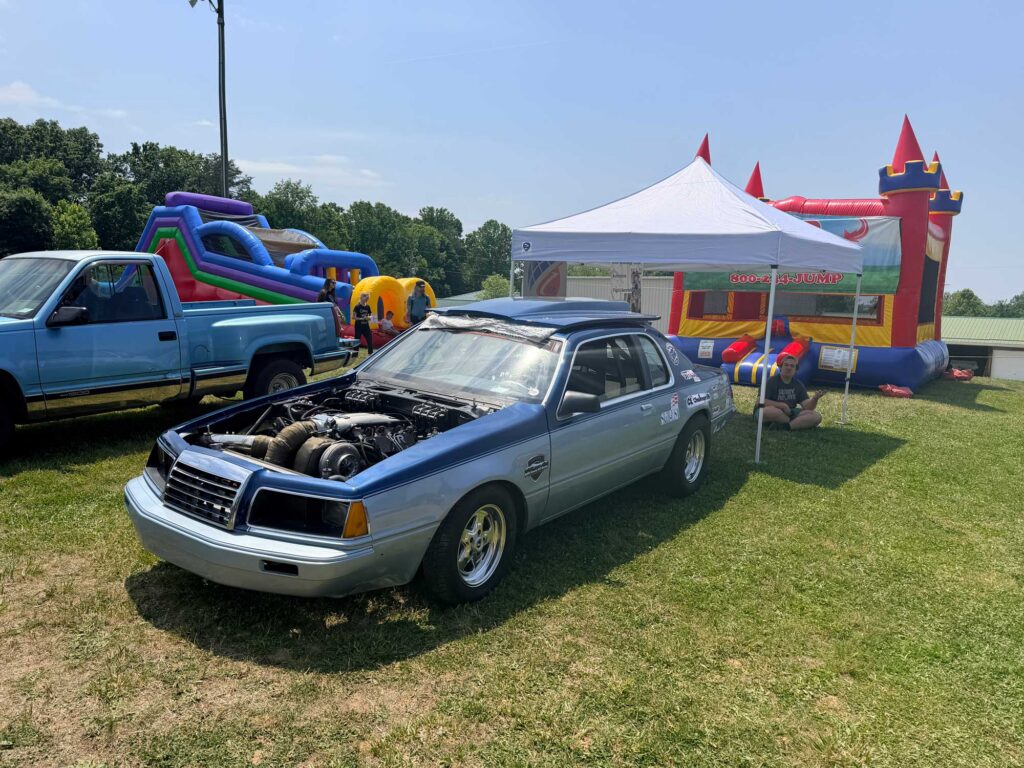
“Our goal is to get in a few passes this month so in August or September, we can make a big ‘to-do’ and take students and administrators to the race track. The car doesn’t need to be super-fast. It just needs to make it down the track, to do what it is designed to do.”
The YouTube channel will see more emphasis as the students become teachers.
“Once we start going to the track, we will be collecting data like air temperature, tire temperature. We want to make videos on what we discover and how we try to use that information to fix problems. People can watch and see our results.”
Ryan also sees the vehicle itself becoming a rolling billboard to promote SkillsUSA, the student-led ATC Racing project and the automotive technology field as a whole.
“We are tapping a job market that a lot of schools aren’t. That is the performance racing industry,” Ryan says. “There is a lot of racing along the I-65 corridor in Kentucky. We should be doing something to get kids in that market. They think racing is cool and this is a project that gets them excited.”
Ryan has seen students make better life decisions as a result of the racing program, he adds, because they wanted to stay involved in the process.
This fall he anticipates taking the Thunderbird to the track on Wednesday evenings with students to test and tune the car. He describes these underclassmen as his junior varsity team. Then on Saturdays, his more polished students — those who’ve been in the program a year or more — will have the opportunity to set up the car for actual competitions.
Ryan says to get the green flag of his fledgling project was encouraging school and district officials to embrace the visibility the students would gain.
“In sports, the students themselves compete. This car won’t compete — it is the students who will be competing for the attention of people who will be hiring them. This is more than a high school activity,” Ryan says. “From a teaching standpoint, this is giving them leverage. People are going to see these kids working hard and making decisions. Employers will notice and that is what we need, for our kids to stand out in the crowd.”